DriveBoy: Your Emotional Co-Driver
Long-haul truck drivers spend 8–11+ hours a day alone on the road. DriveBoy is a small companion device and app that reacts to how the driver is doing, encourages rest, and keeps them company, without adding another alert.
Skip to solutionWhy it matters
- 13%of truck accidents are fatigue-related (FMCSA, NIH)
- 91Kcrashes and 50K injuries due to drowsy driving (NHTSA)
- 65%of drivers report feeling fatigued
- 13%admit to falling asleep at the wheel (CloudTrucks survey)
Context
Drivers with no one to check on them
Community
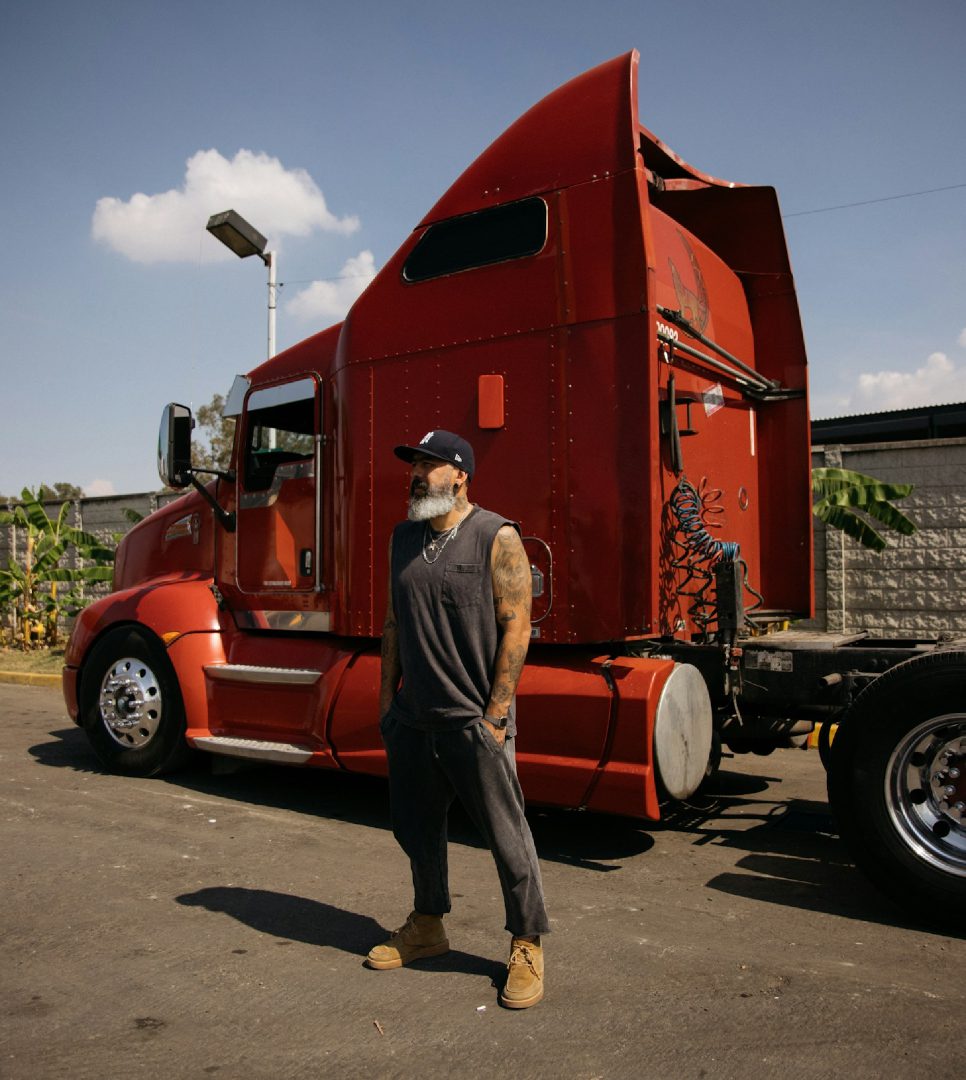
- Long-distance and professional drivers
- Solo drivers
- Drivers who have no one to check on them
Why they matter
These drivers face continuous mental load, rapid fatigue buildup and increased safety risks, yet they lack an immediate, emotionally supportive companion that can help them monitor and regulate their state in real time.
Design idea
When truckers take a break, casual mobile games and brain-training apps are already a common way to unwind at rest stops. Light, playful interaction already fits their downtime. What’s missing is something that notices how they feel while they drive. Source
Research
GPS guides the route, not the driver
Long-distance drivers often experience accumulated fatigue, emotional numbness, and difficulty recognizing when they actually need to rest.
People tend to underestimate their own fatigue, especially in monotonous driving conditions. GPS navigation only guides the route. It doesn’t give emotional feedback or encourage mental breaks.
So I wanted to create an emotionally responsive driving companion: not just a navigation tool, but a co-presence that actively reflects the driver’s state back to them.
What drivers say
“My day usually starts between 2 and 4 a.m. … I drive up to 11 hours a day … After work, I usually sleep inside the truck, either in a parking lot or at a rest stop.”
Long-haul trucker, Yes and Yes“The best part is seeing beautiful scenery and discovering new cities — but the downside is the constant fatigue and loneliness.”
Team driver, The New York TimesProblem & Solution
Three problems, three gentle responses
Fatigue
Time Feedback
Gentle intervention for fatigue prevention.
Isolation
Face Interaction
Emotional presence through soft interaction.
Rest stops
Share Location
Context-aware rest guidance without breaking the driving flow.
Design Iteration
Designing a face that feels, not a dashboard
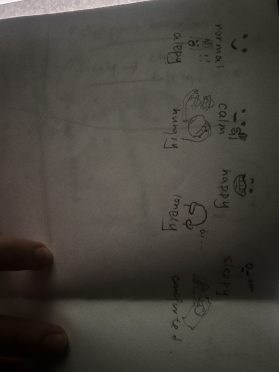
I sketched and collected faces, then grouped the states DriveBoy needs to show into three layers, so every expression has a job.
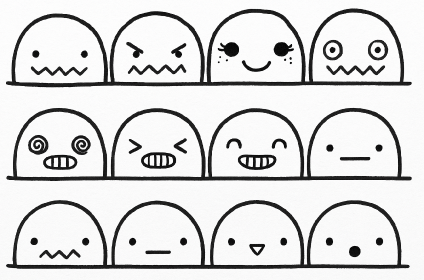
Safety layer
Alert · Sleepy · Stressed
Emotional layer
Lonely · Comforted · Happy
Wellness layer
Calm · Hungry · Normal

First prototypes
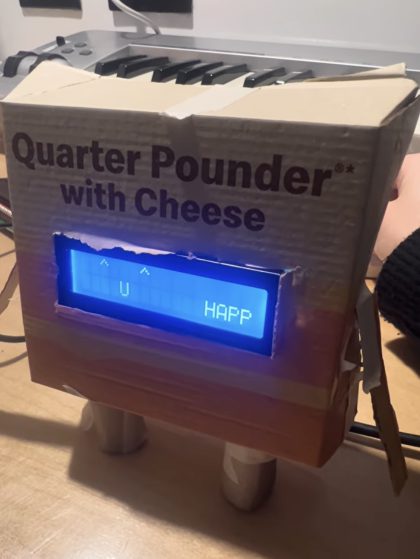
v1: a 16×2 character LCD in a cardboard box
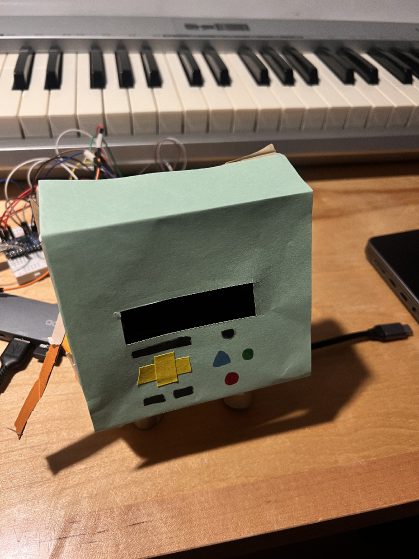
v2: a friendlier, handheld-console-style enclosure
Expressions in the live demo
- NORMAL ^-^
- CALM (- -)
- HAPPY ^o^
- SLEEPY -*-
- ALERT O_O
- HUNGRY :P
- LONELY ;_;
- COMFORT uwu
Feedback
What the critique changed
Feedback
- The connection still felt missing: the blue character screen lacked warmth.
- Follow automotive UX standards.
- Automotive UX means minimal attention, maximum safety.
Next version
- A bigger screen with clearer expressions
- Change the color of the face
- Two modes: Driving and Resting
Solution
One companion, two modes
DriveBoy pairs an ESP32 device with a TFT screen and a Flutter app over Bluetooth Low Energy. The app picks the mode, and the device shows how DriveBoy is feeling.
Design concept
Start by choosing a mode.
Driving keeps DriveBoy quiet and supportive. Rest turns it playful once the engine stops.
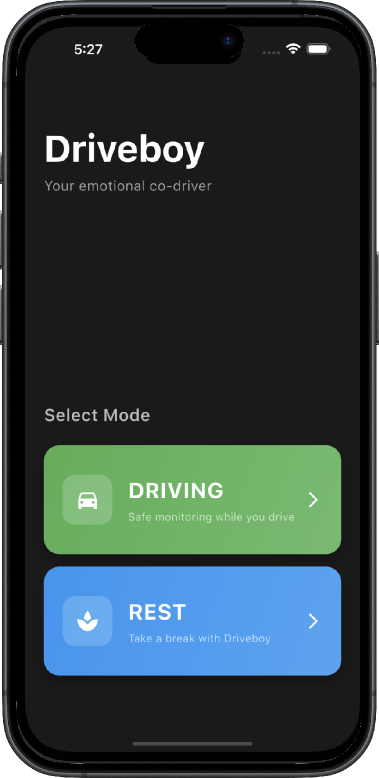
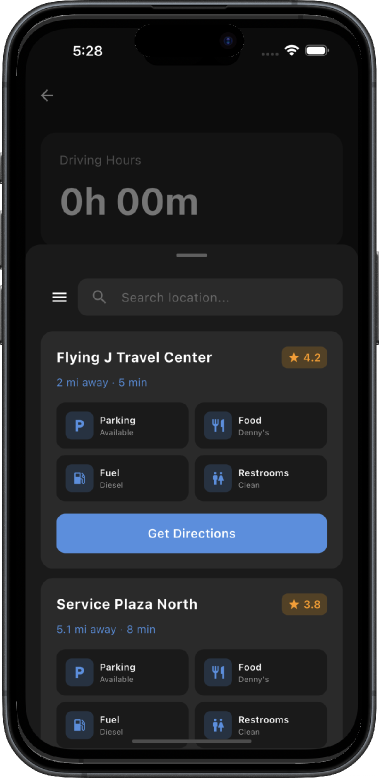
Drive mode
Gentle support without distraction.
A smart fatigue and wellness assistant: a driving-hours timer, reminders for meals, hydration and stretch breaks, and GPS-based alerts that recommend nearby rest areas with parking, food and fuel.
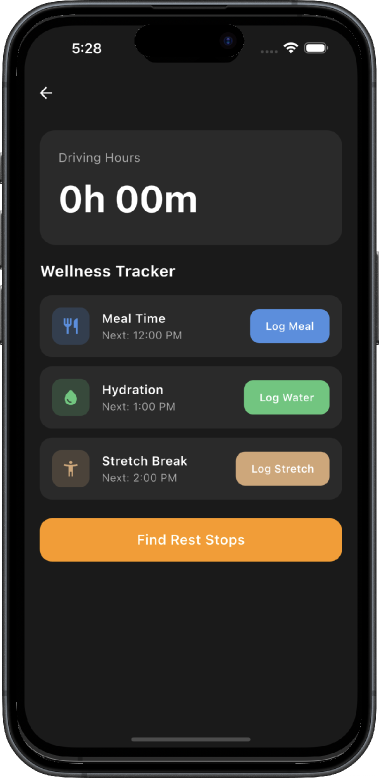
Rest mode
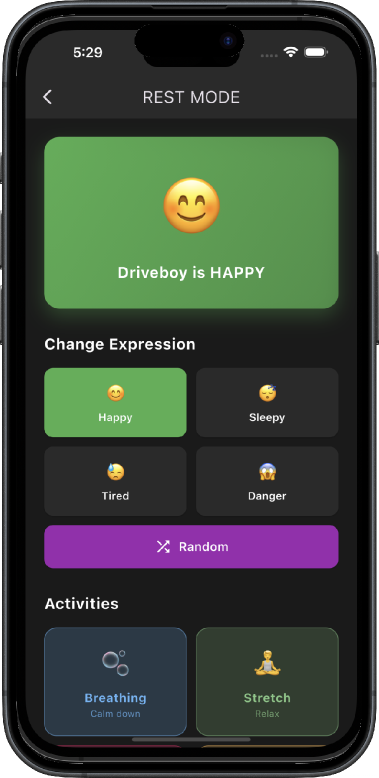
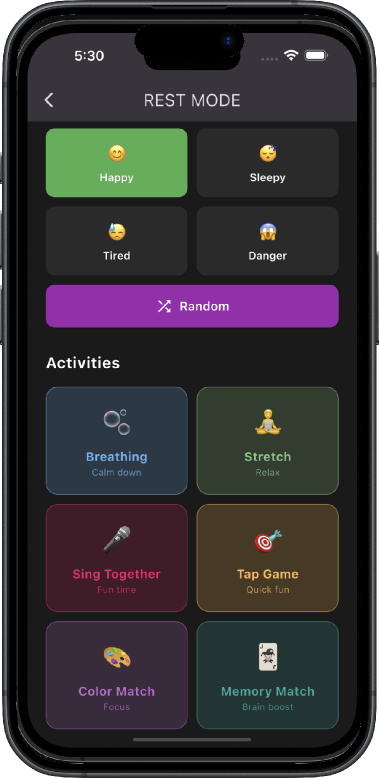
When the engine stops, DriveBoy plays.
Change DriveBoy’s expression, then breathe, stretch, sing together, or play quick games like Tap, Color Match and Memory Match.
Live Demo
The app and the device, in sync
Tapping an expression or an activity in the app updates DriveBoy’s face over BLE, like the breathing exercise counting down together.
Exhibition
A small friend beside you
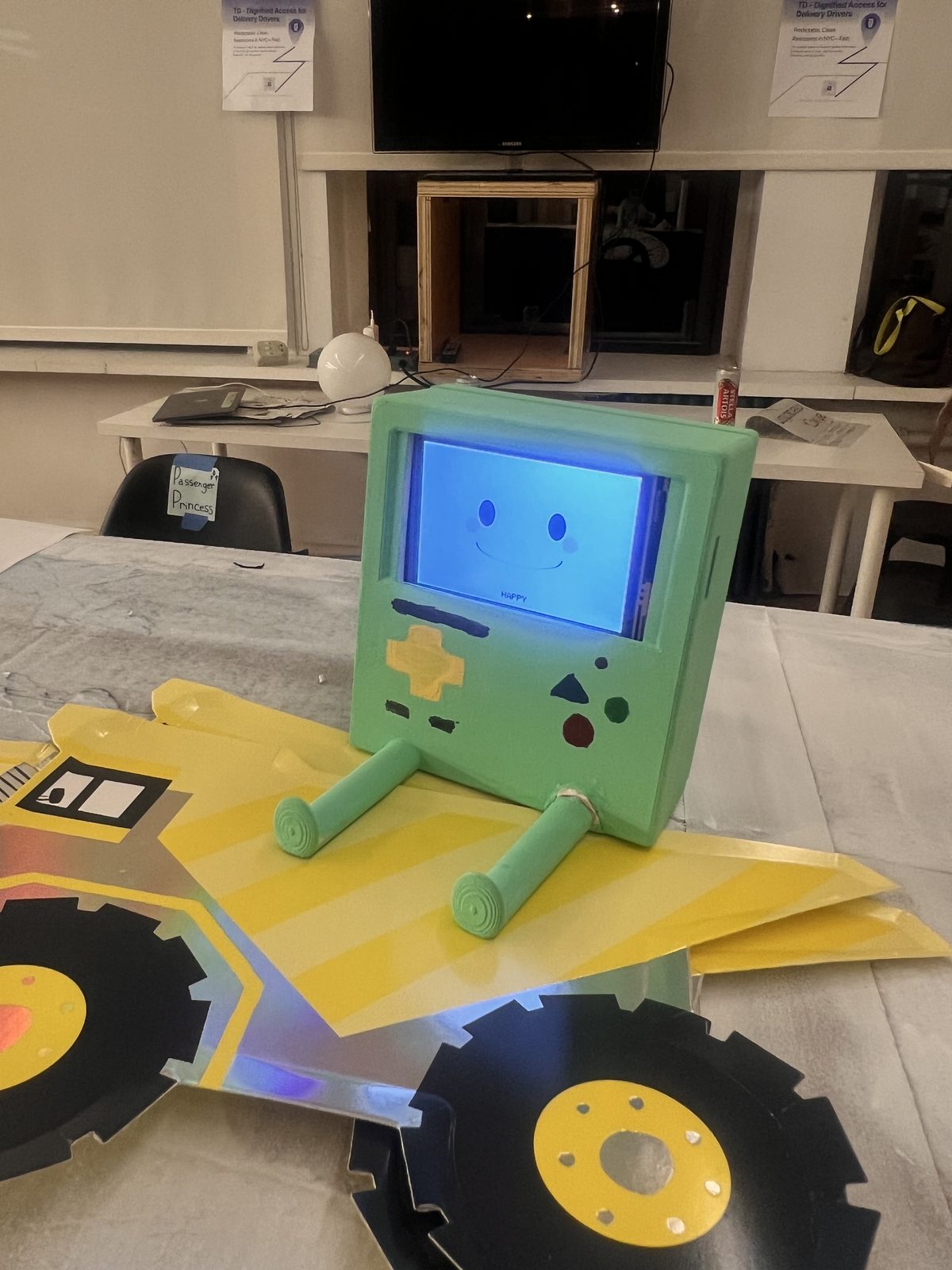
DriveBoy was exhibited as an interactive installation that simulated a truck cab, so visitors could experience its companionship firsthand.
It was designed to feel soft, friendly, approachable and a little nostalgic. DriveBoy is not a GPS. It sits quietly beside the driver, without trying to overwhelm, track or judge them.
See next
 Ready Action: An AI Scene Partner That Listens, Performs, and Coaches
 Gus in the Room: Bringing a Dog Into the Classroom Through a Robot’s Eye
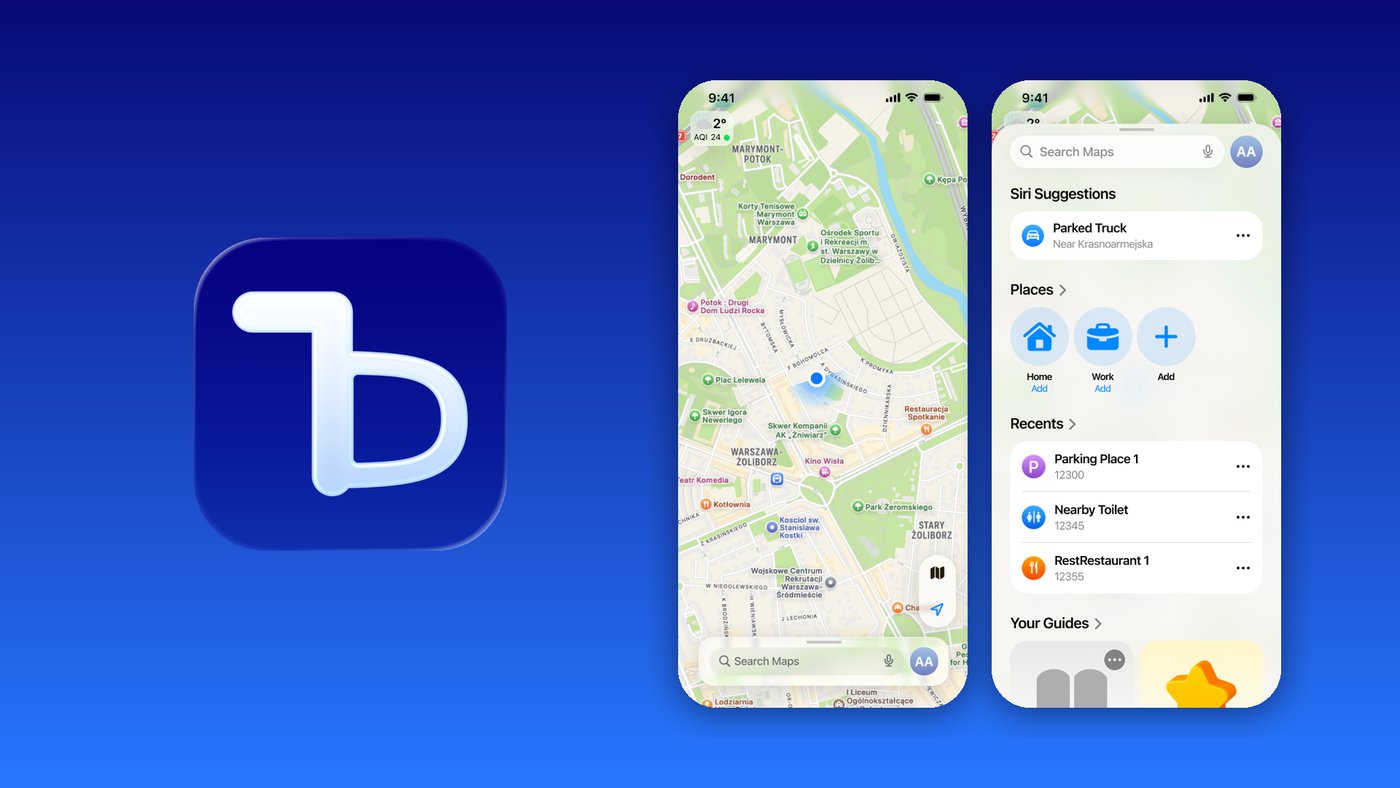 Toilet Delivery: Dignified Restroom Access for NYC Delivery Workers
 Sober Buddy: An AI Player That Joins the Table
 Budgie: Keeping Friendships Alive, One Chirp at a Time
 Dusty & Co.: Designing “Soft Clarity” for a Pottery Studio
 Industrious: Creating Natural, Authentic Connection in Shared Workspaces
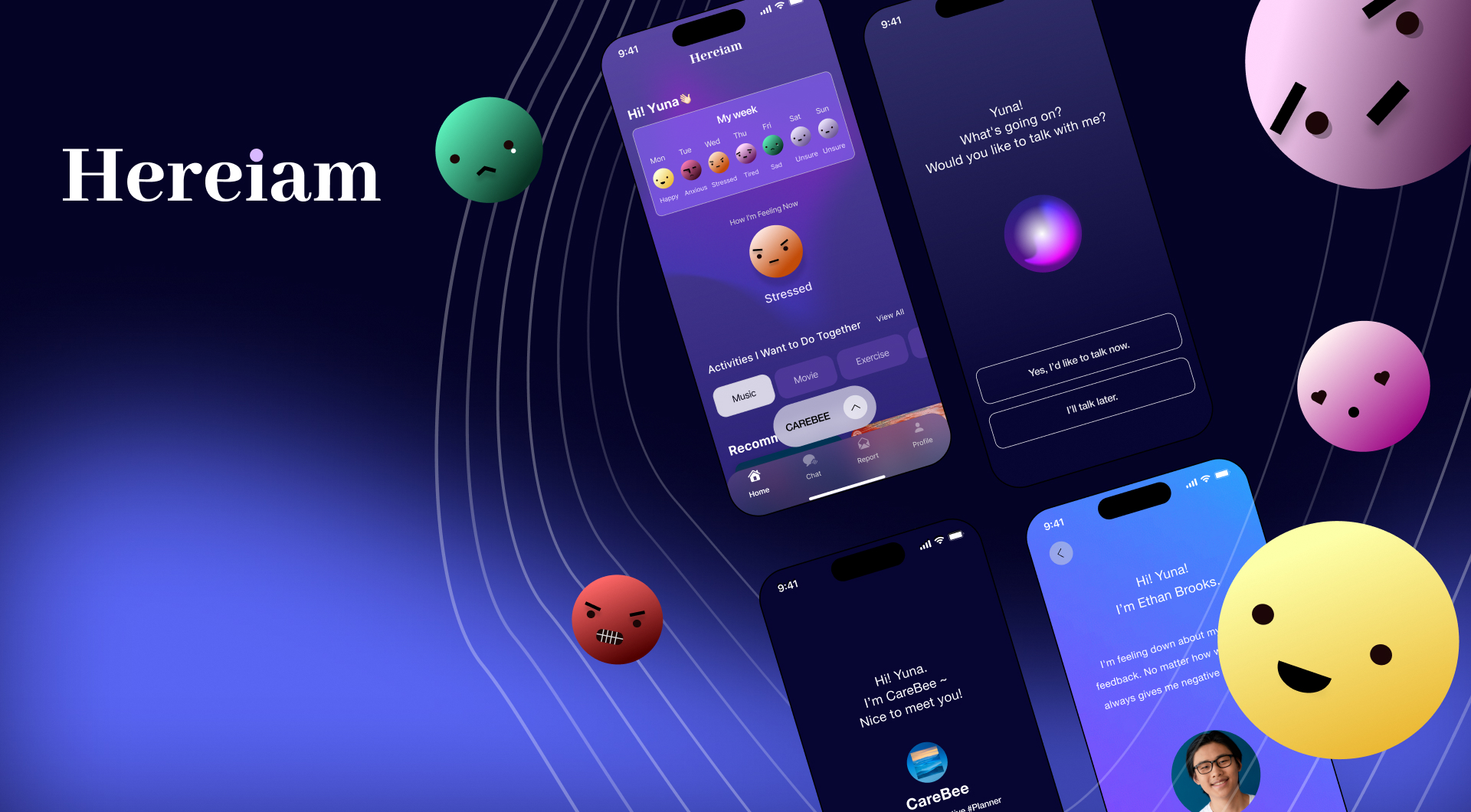 Hereiam: An AI-Driven Psychological Care Service
 Baekgomtang: A Climate Crisis Campaign Website
 Octofix: A Direct Alteration Service for Purchase and Repairs
 Exhibition Assistant: Planning an Exhibition Day Made Easy
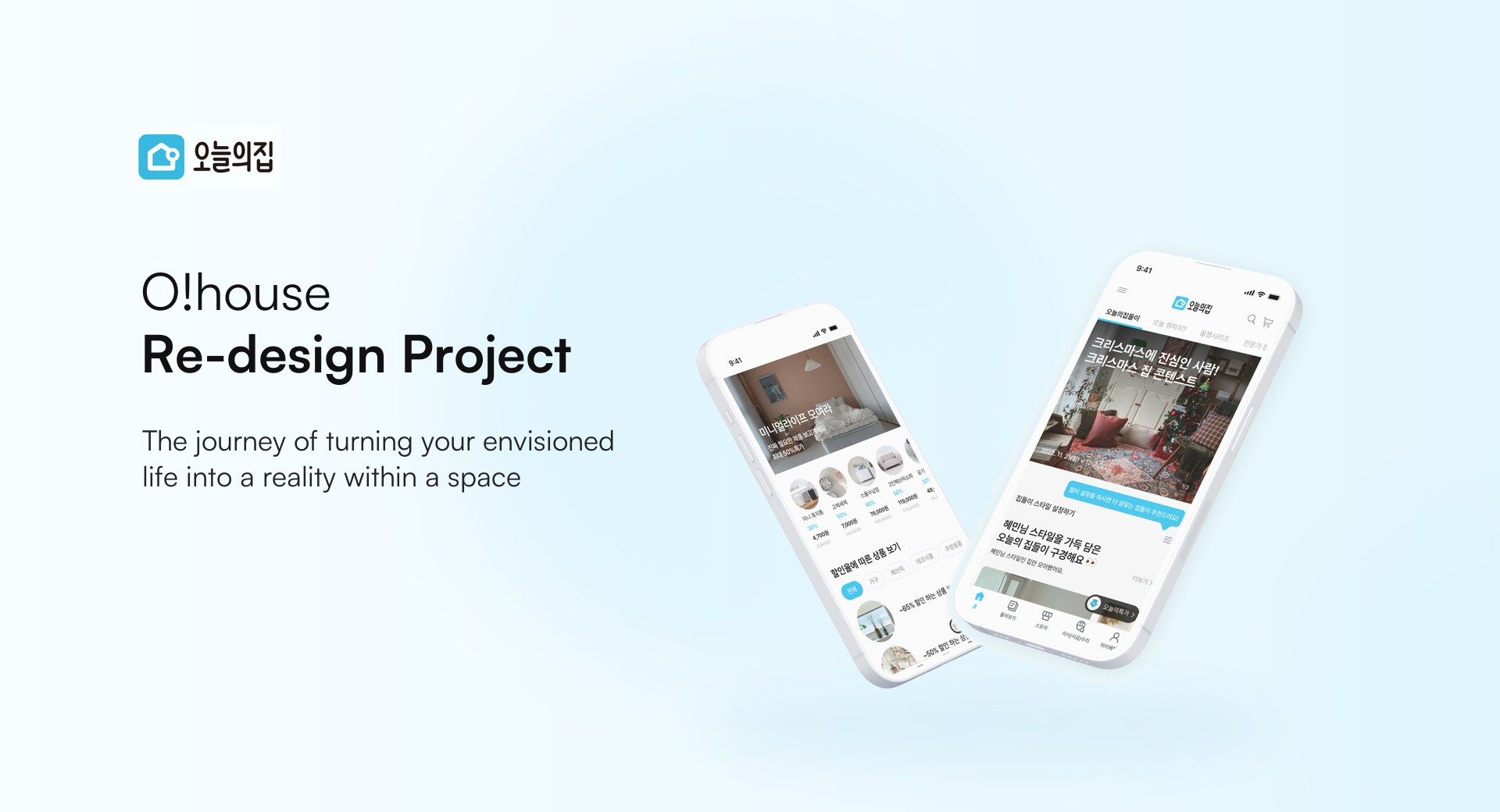 O!house Re-design: Personalized Home Tours and Deals← All work