Industrious: Creating Natural, Authentic Connection in Shared Workspaces
Why do coworking members share a building but rarely connect? We interviewed members, hybrid workers and an operations expert, and proposed three ways to make connection feel natural instead of forced.
Skip to solutionAt a glance
- 9people interviewed across members, hybrid workers and operations
- <10people came to a building-wide member event
- 3core insights from affinity mapping
- 3recommendations, prioritized by cost and value
Context
A full building, an empty event.
“Believe it or not, there was probably less than 10 people for that whole building that came… (Japanese Stitching Event)… Less than 10 people.”
Industrious workerIndustrious runs premium shared workplaces, and its members already value the professional, well-supported service. But programmed events draw few people, and members rarely get to know the people working around them.
Research goal & purpose
Increase the interaction between workers and the usage of shared office spaces.
Foster stronger belonging and engagement.
Higher member retention at Industrious.
Research
How we did the research
01 Planning & Preparation
Set up the research goal, recruiting and interview questions.
02 Data Collection
Interviews, organized into participant snapshots with key quotes.
03 Analysis & Synthesis
Affinity mapping and pattern recognition, distilled into 3 core insights.
04 Ideation & Recommendations
How Might We questions, then solutions.

We interviewed 9 participants: 3 Industrious members, 5 office-hybrid workers and 1 workplace operations expert.
Common
- Most participants work hybrid, moving fluidly between office, home and third spaces.
- People want awareness without interruption: knowing who is around, without being watched or socially exposed.
- Responsiveness, clarity and everyday kindness matter more than formal bonding or networking.
- Social connection is preferred when it is embedded in daily routines (coffee, lunch, brief check-ins), not scheduled events.
Industrious members & expert
- Daily touchpoints (tea, coffee, greetings) outperform big events.
- Topic-based or utility-driven interactions (classes, markets tied to personal interests) beat generic social events.
- Shared amenities like the coffee bar and cafeteria work as natural, low-pressure social touchpoints in short, task-adjacent moments.
- Post-COVID, large programmed events declined, replaced by small, recurring rituals.
Office-hybrid workers
- Workers prioritize choice, flexibility and psychological safety in both space and social interaction.
- Many avoid events that require forced interaction with strangers or unclear expectations (who attends, dress code, purpose).
- Peer-driven interaction feels safer and more meaningful than manager-led, top-down initiatives.
- Spatial conditions (noise, partitions, visibility, quiet zones) strongly affect whether people open up or withdraw.
Insights
Three themes behind the empty room
Affinity mapping the interviews surfaced three themes: whether people can be themselves, how much control they have over their environment, and where warmth at work really comes from.
Theme 1
Can I be myself here?
People hesitate to join office events not because they doubt the event’s value, but because they’re unsure if they can show up as themselves without forced performance.
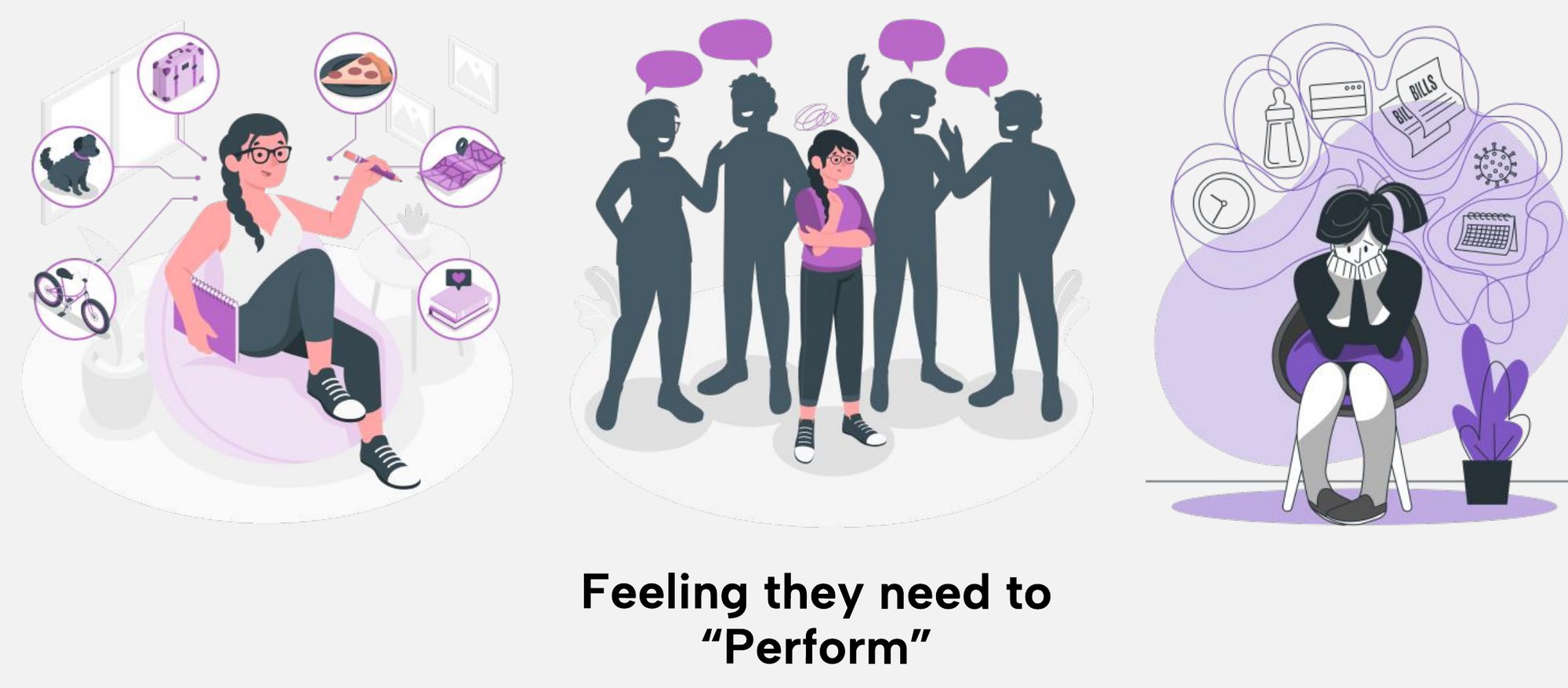
“I am past the show and trying to impress anyone… I would rather go to a bar with one or two people that I know really well, where we can just be ourselves.”
- Avoid feeling “performative” or acting like someone else
- Avoid feeling obliged to make contextless small talk
- Prefer gathering with close, trusted people
Theme 2
Control over environment and work style
Workers are not choosing between focus and collaboration. They want to stay mentally focused while socially present, and current workplace design doesn’t support this in-between state.
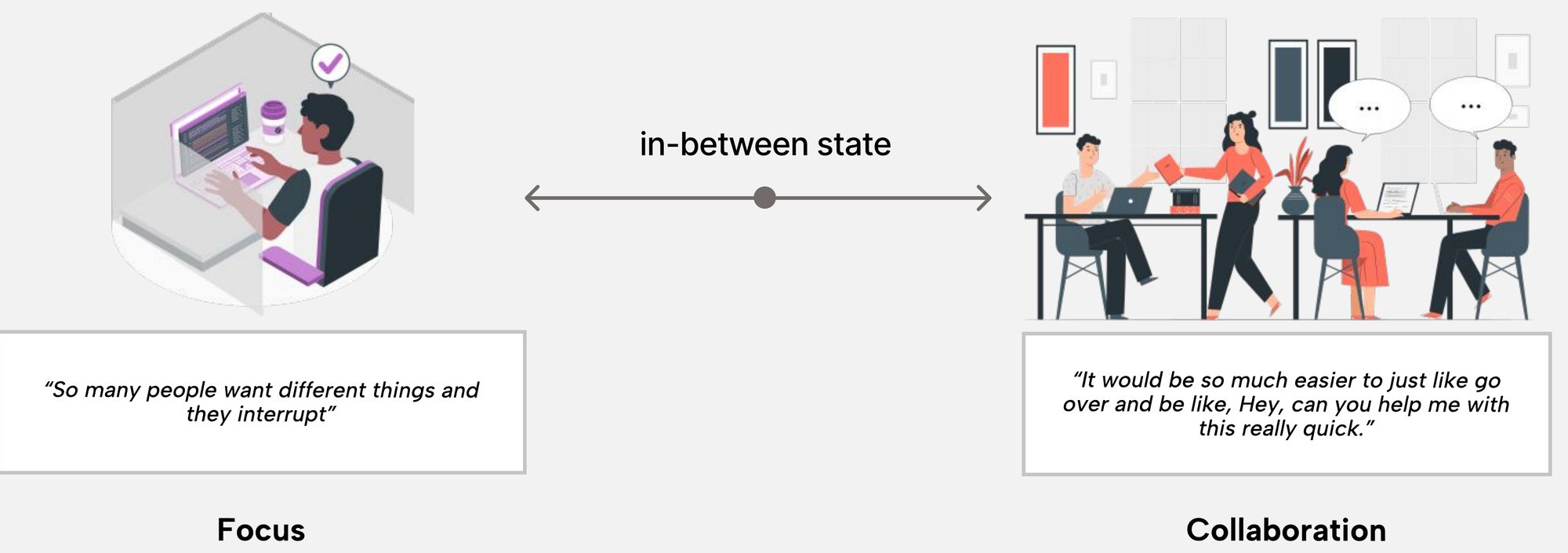
They don’t simply need different spaces for focus and collaboration. They need shared environments that communicate intent without explanation.
Theme 3
Appreciation, bonding & the role of shared office spaces
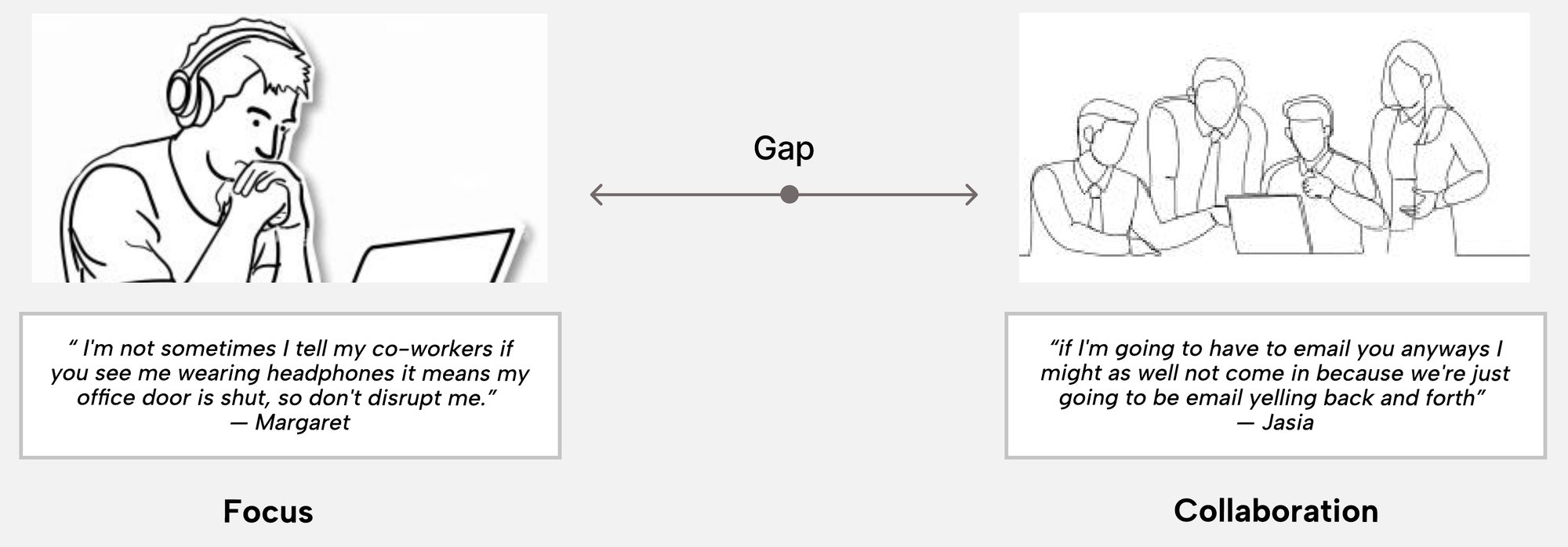
When top-down systems fail to provide human warmth, employees turn to bottom-up connections for fulfilment, which creates a gap that shared office spaces can bridge.
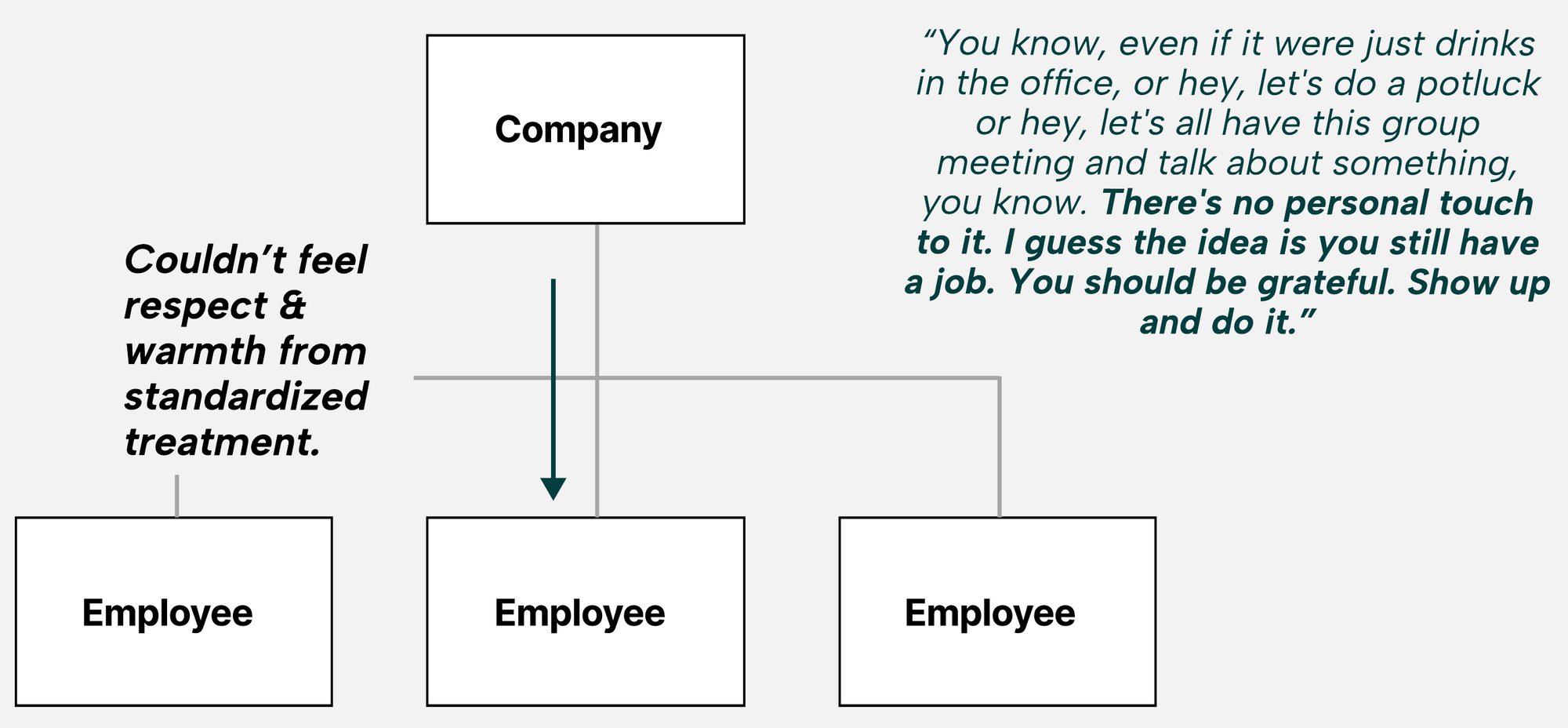
Top-down treatment feels impersonal.
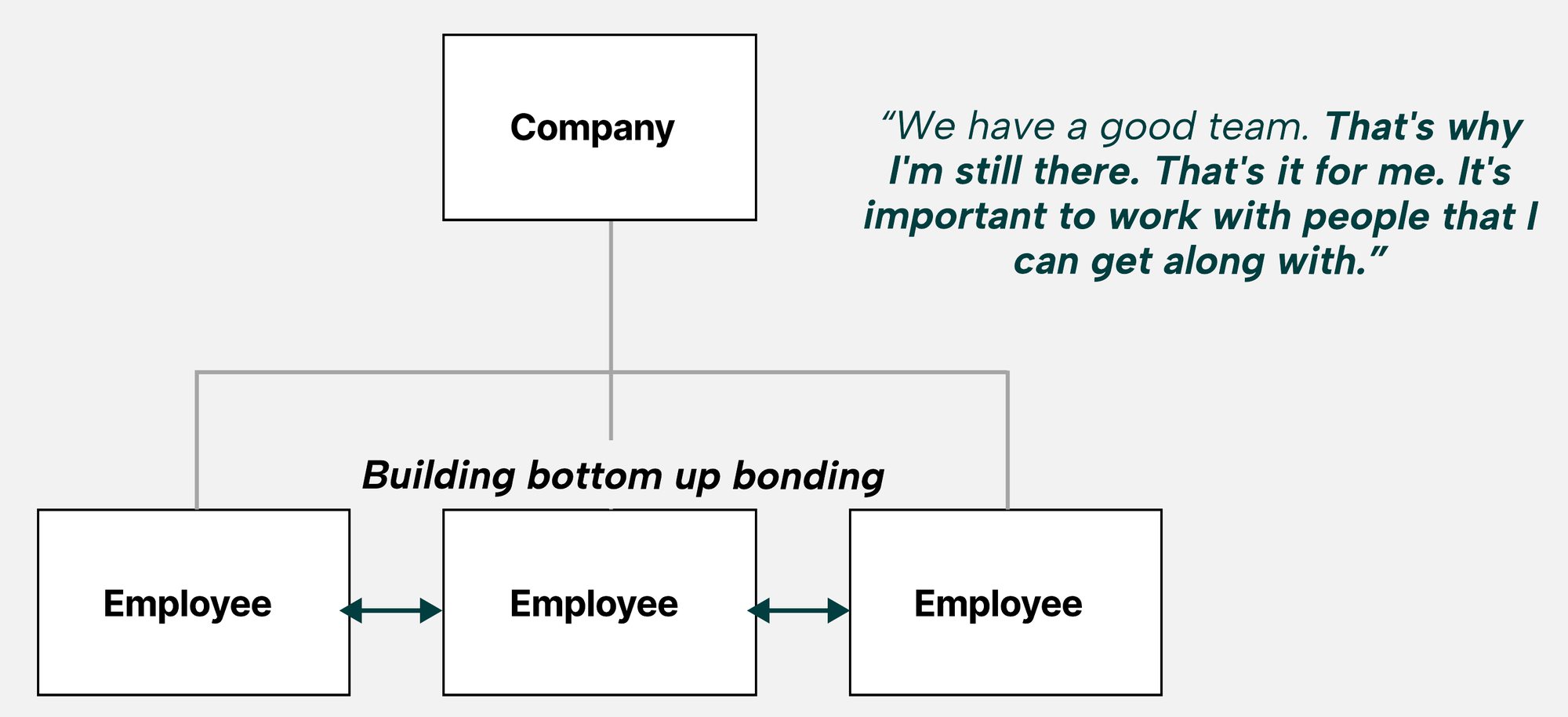
Peers become the reason to stay.
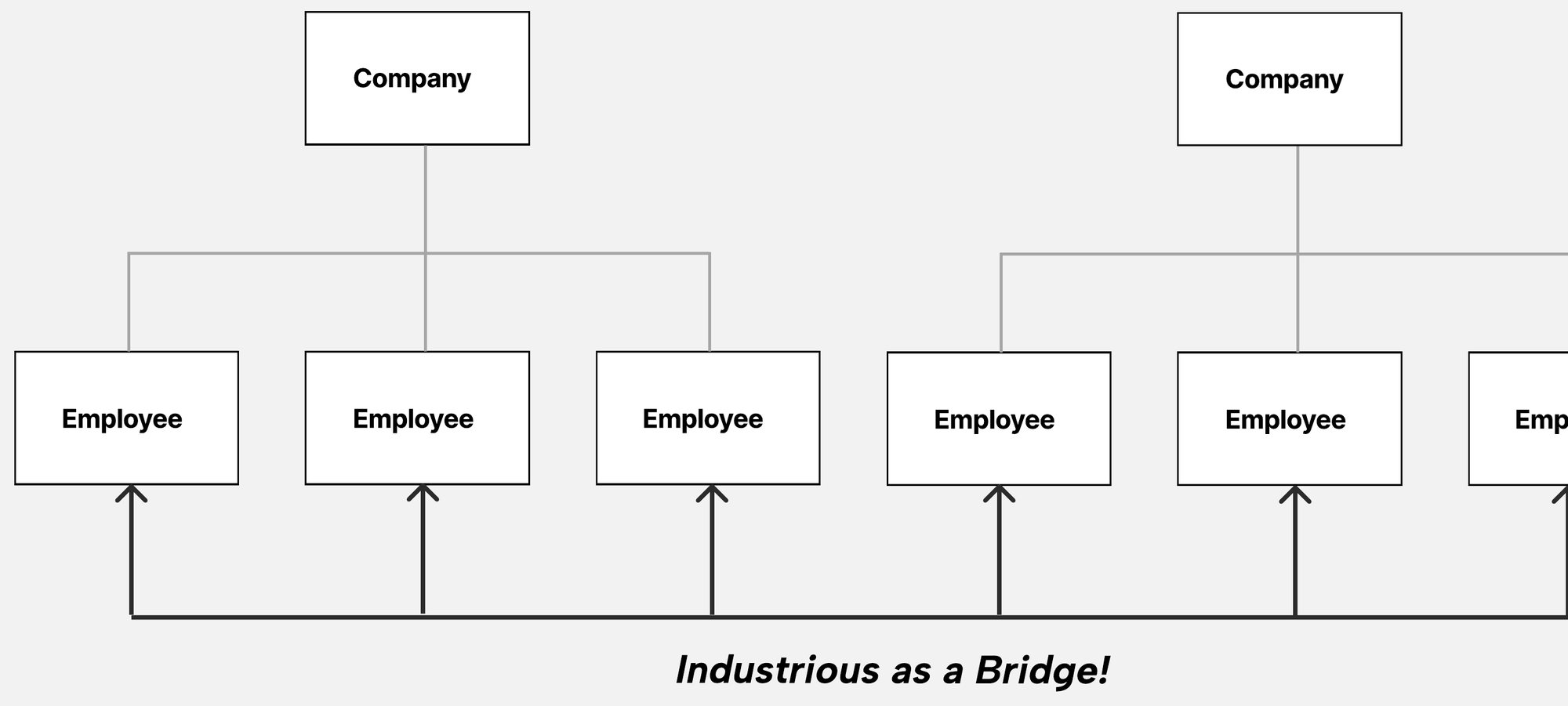
Design Opportunity
Facilitating organic connection
What Industrious already does well
- A professional, well-supported system for workers.
- Valuable services that meet daily workplace needs.
The opportunity
A better space for people to be themselves and connect organically:
- Create natural interaction touchpoints, not forced networking
- Enable peer-driven community building
- Design for comfort and psychological safety
- Support warmth throughout the building
Solution
Three recommendations
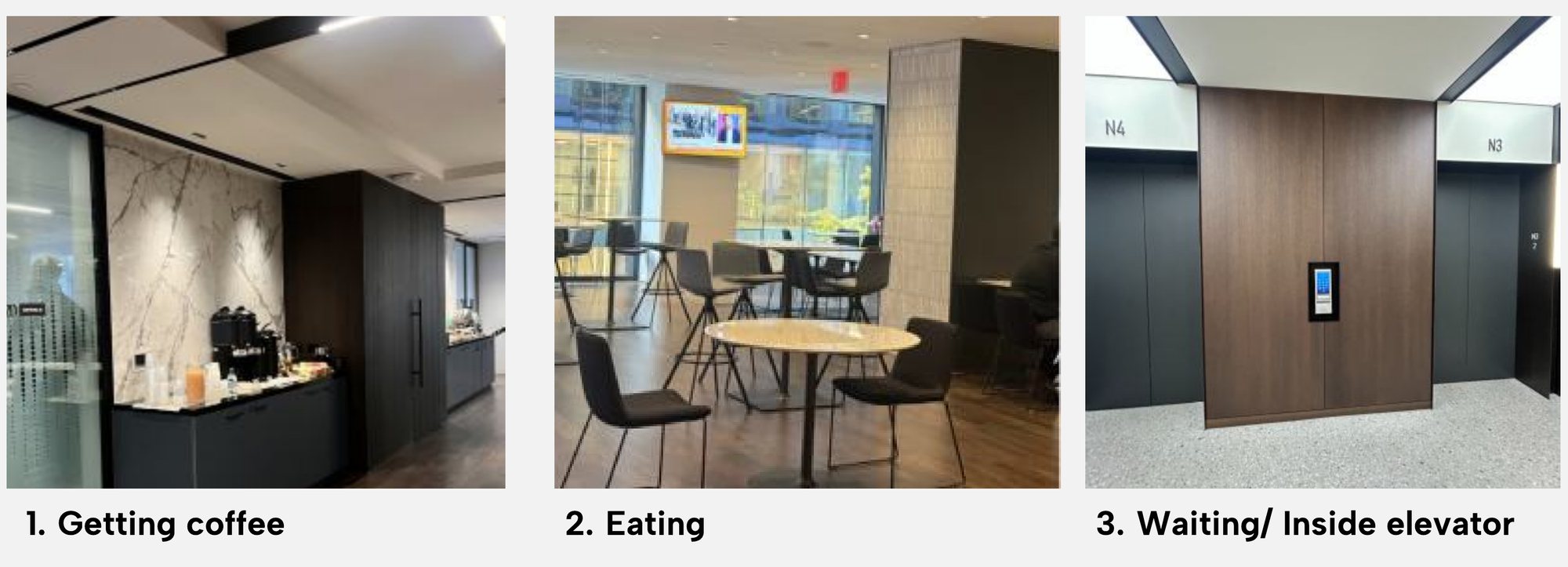
Solution #1: Low-stakes conversation starters
Start where small talk already happens.
Getting coffee, eating, and waiting for the elevator are moments when people naturally start conversations. We turn each one into a light, optional prompt.
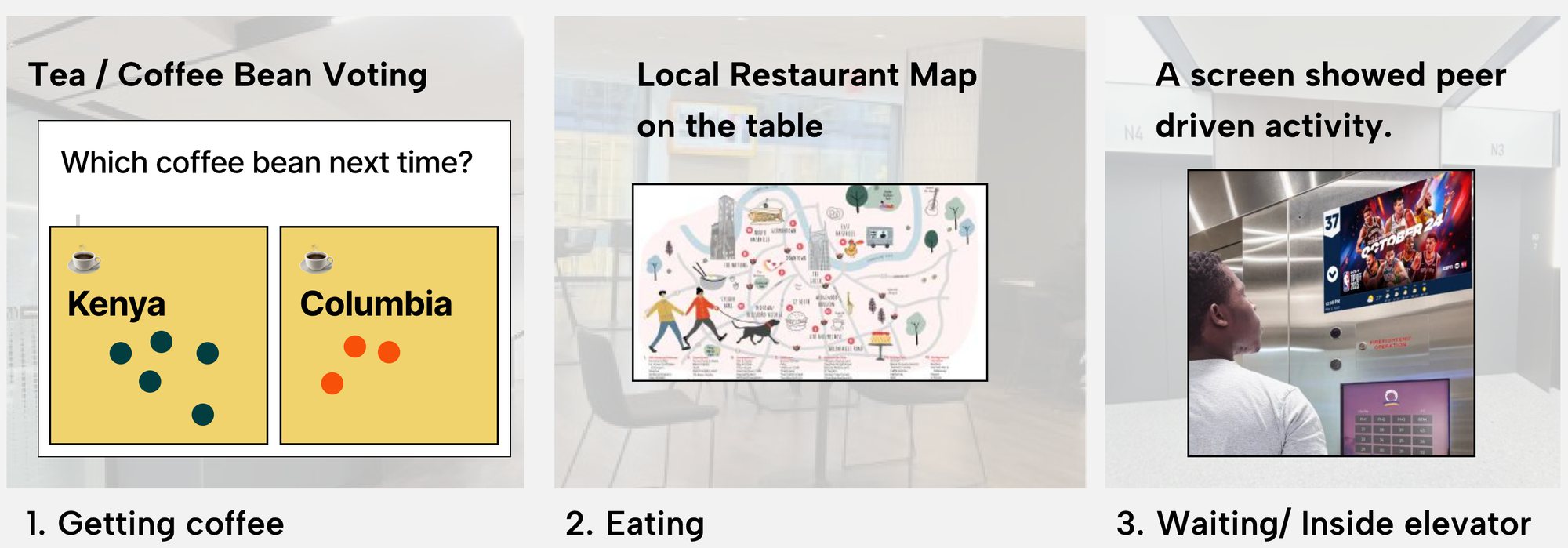
Solution #2: Peer-driven events in the app
Let members host their own events.
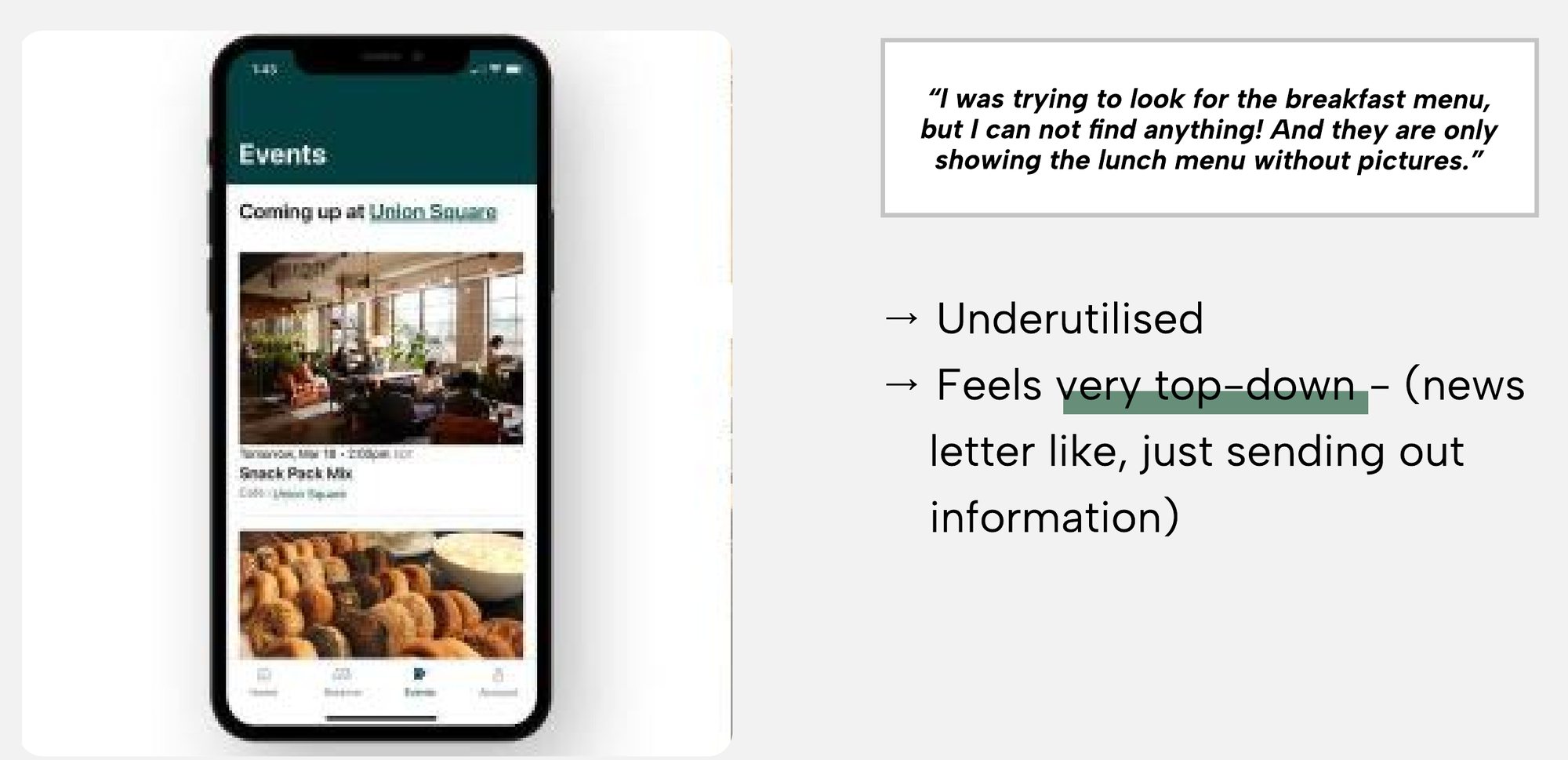
Today the app is underused and feels top-down, like a newsletter that only sends out information. One member said: “I was trying to look for the breakfast menu, but I cannot find anything!”
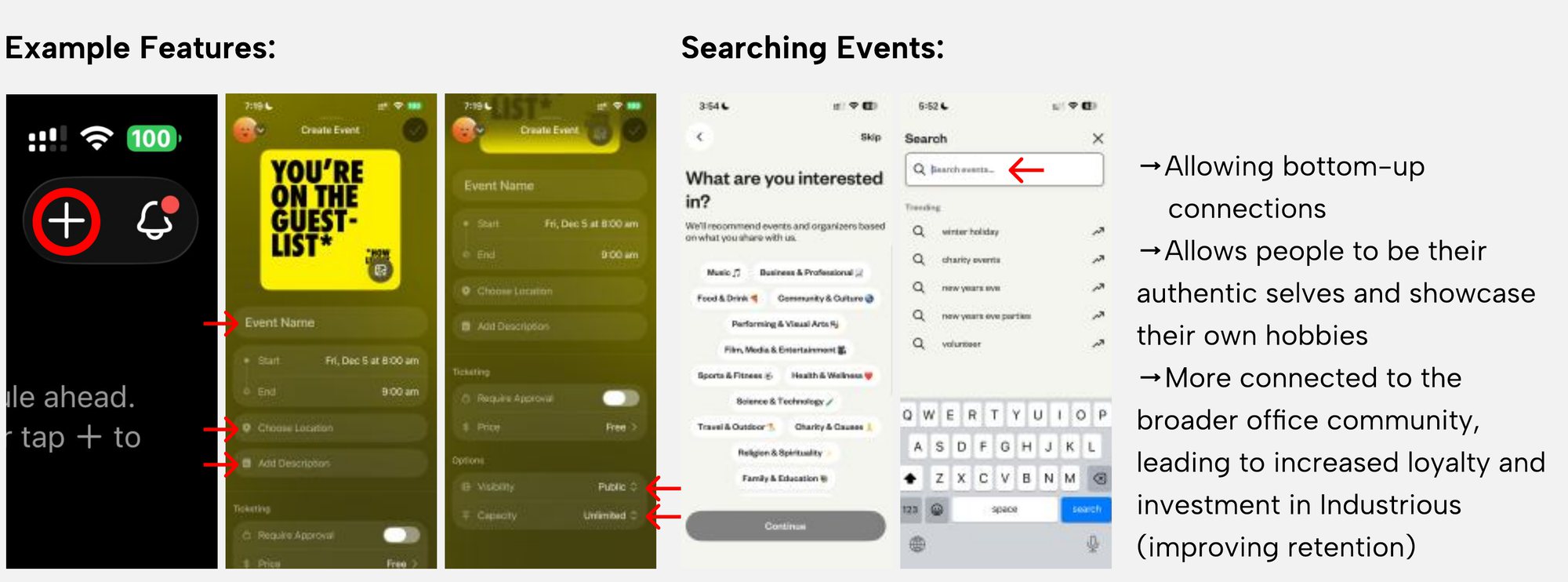
Letting workers create and search events around shared interests allows bottom-up connections, lets people show their authentic selves and hobbies, and ties them to the broader office community, which builds loyalty and retention.
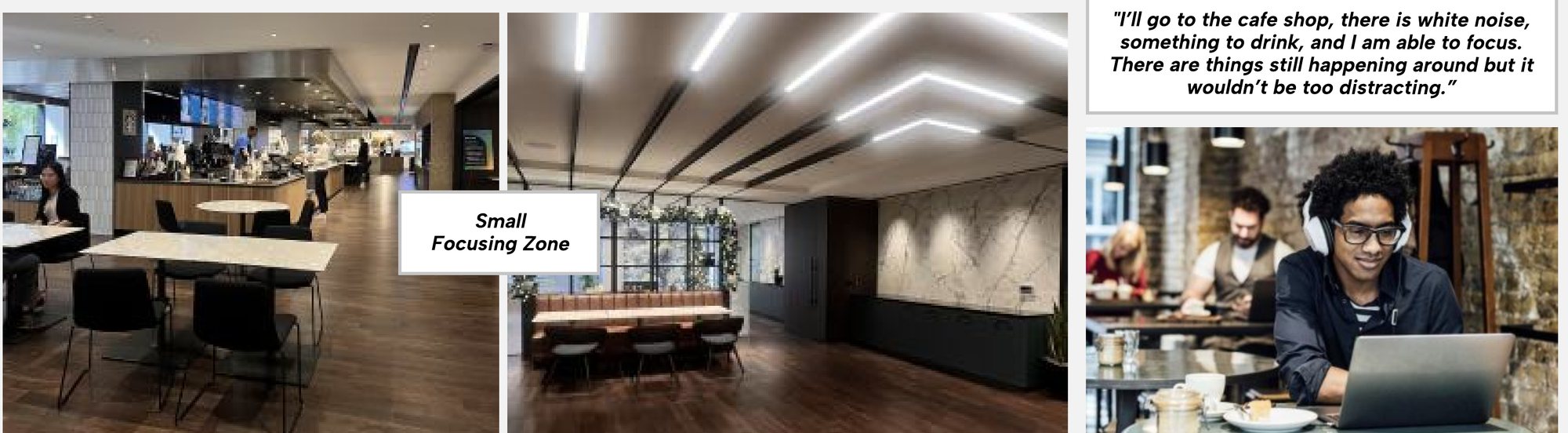
Solution #3: Nuanced space
Focus zones inside social spaces.
Some workers need ambient presence (the energy of people and background noise) but want to work alone without social interaction. A nuanced space sits between collaboration and focus.
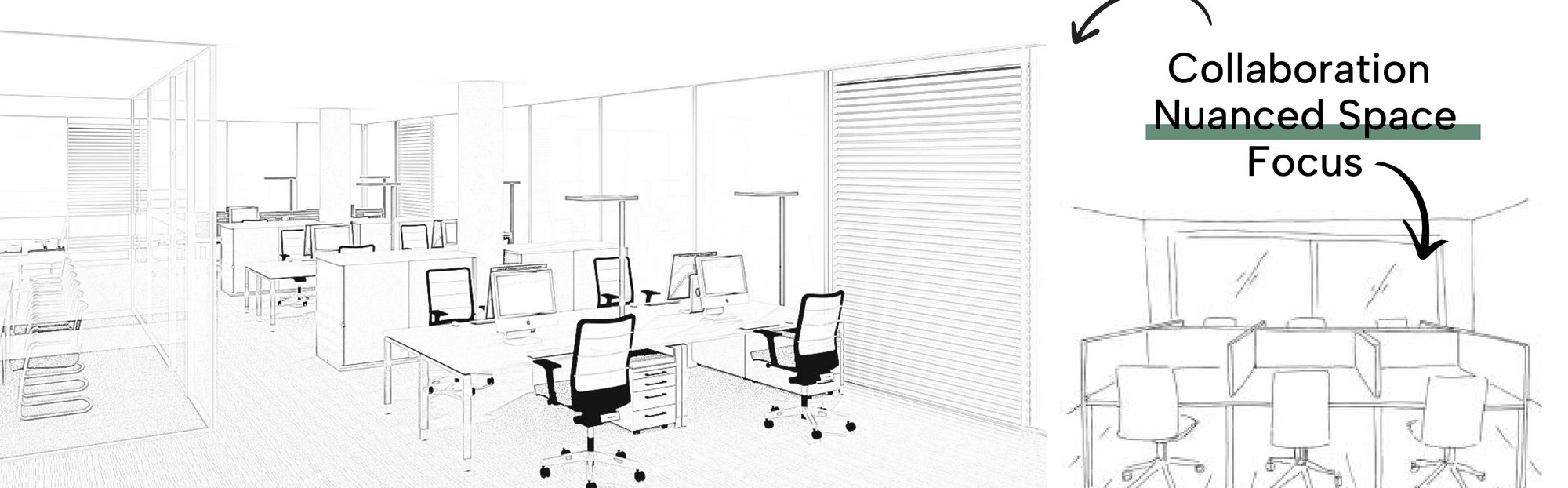
Dining and kitchen areas are usually social, but they can be rethought with small micro-zones that signal a worker’s intention to focus. As one participant put it: “I’ll go to the coffee shop, there is white noise, something to drink, and I am able to focus.”
Prioritization
Start small, then build
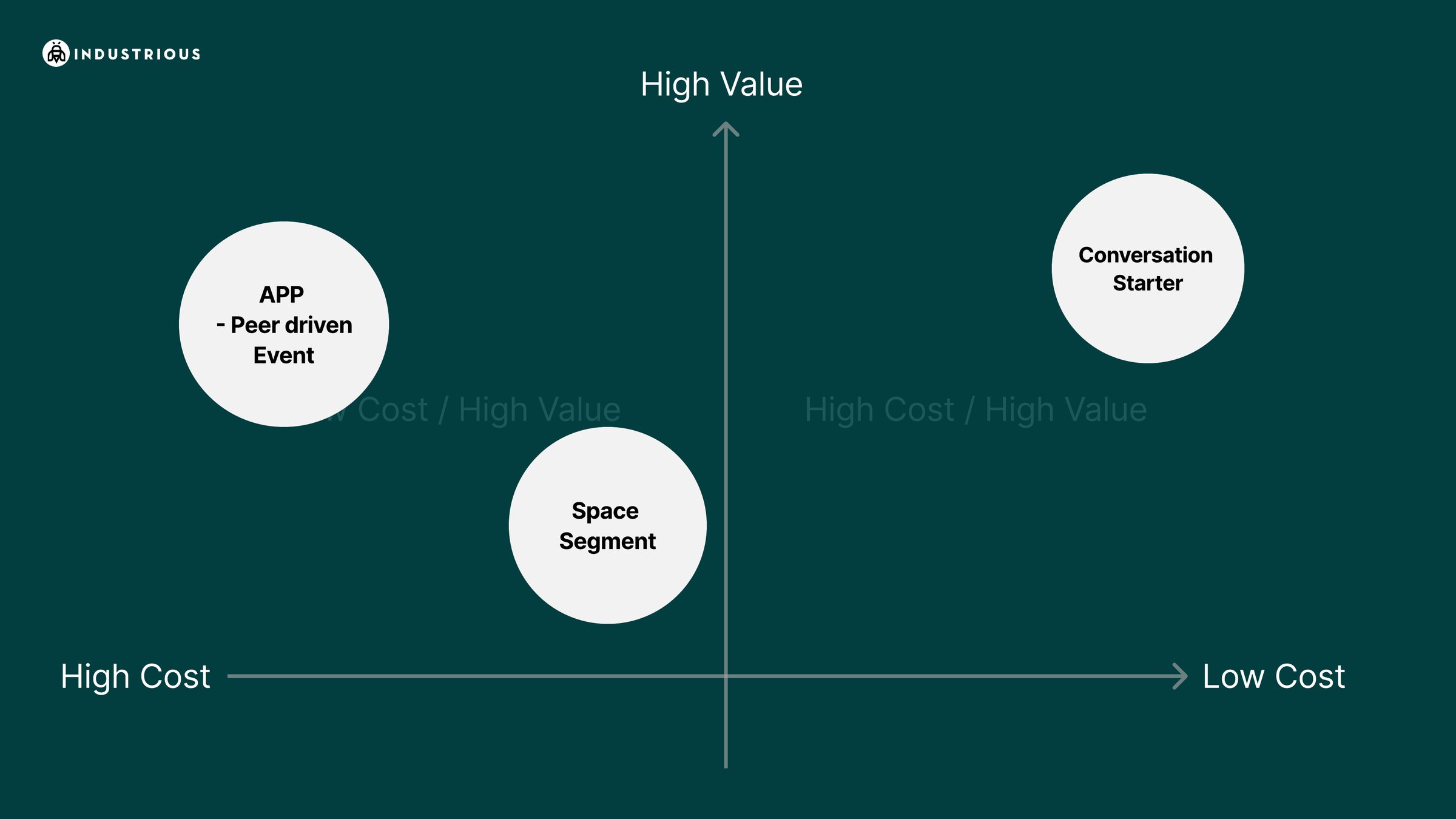
Mapping the ideas by cost and value, conversation starters are the quickest win: low cost, high value. The peer-driven app events add high value at a higher cost, and space segmentation is the larger, longer-term investment.
Reflection
Connection can’t be scheduled.
I went in expecting to design better events. The interviews kept pointing somewhere else: people connect through small, everyday moments when they feel safe to be themselves. That shifted our work from programming more activities to designing the conditions for connection, in the space, the app and the coffee line.
See next
 Ready Action: An AI Scene Partner That Listens, Performs, and Coaches
 Gus in the Room: Bringing a Dog Into the Classroom Through a Robot’s Eye
 Toilet Delivery: Dignified Restroom Access for NYC Delivery Workers
 Sober Buddy: An AI Player That Joins the Table
 Budgie: Keeping Friendships Alive, One Chirp at a Time
 Dusty & Co.: Designing “Soft Clarity” for a Pottery Studio
 DriveBoy: An Emotional Co-Driver for Long-Haul Truck Drivers
 Hereiam: An AI-Driven Psychological Care Service
 Baekgomtang: A Climate Crisis Campaign Website
 Octofix: A Direct Alteration Service for Purchase and Repairs
 Exhibition Assistant: Planning an Exhibition Day Made Easy
 O!house Re-design: Personalized Home Tours and Deals← All work